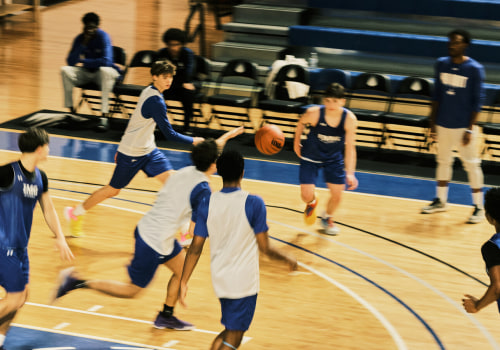
Your friend sends “WHAT A FINISH” while the ball is still in play on your screen. The message contains no score, but it has already changed the moment. For Florida sports fans watching together from different homes, a useful group-chat agreement covers reactions as well as results.
Live video can be delayed by buffering and network issues. Treat everyone being on the same play as something to check, not something the word “live” guarantees. You can enjoy the conversation without trying to make every screen run in perfect step.
Choose how the chat will work
Before the game, ask whether anyone wants to avoid learning about plays before seeing them. Then agree on one of these approaches:
- Immediate reactions: People comment as their own feed shows the action. Everyone joining accepts that messages may arrive before the corresponding pictures.
- Checkpoint discussion: Game comments wait until everyone taking part confirms they have reached an agreed point. Discussion then stays within what everyone has seen.
- After-game discussion: Save game talk until all participating viewers say they have finished. This is useful when someone plans to start much later.
Choose one approach for the conversation people will actually read. If some friends want immediate reactions and others do not, use separate conversations only if everyone agrees and can keep them distinct. Do not put a delayed viewer into an unrestricted discussion and expect them to dodge individual messages.
Define spoilers broadly enough
A spoiler can be a score, a player celebrating, a complaint about a call, or a prediction posted after the sender has already seen the outcome. “You are going to love this” also tells a viewer to expect something. Agree that reaction images, excited punctuation, and hints wait under the same rule as written play descriptions.
During a checkpoint wait, keep messages about coordination: “Still watching” or “I need a break.” Avoid “How have they not scored yet?” or “Tell me when you see that mistake.” Both reveal information about what someone else may be approaching.
A warning attached to a reaction is not a substitute for waiting. The safest message for an unseen play is the one you have not sent yet.
Pick a boundary everyone can identify
Choose a clear stopping point before anyone reaches it, such as the end of the first quarter in a basketball game. Ask each participating viewer to confirm that they have seen the quarter finish. Once everyone confirms, first-quarter discussion is open, even if some screens are already showing later action.
State the limit explicitly: “First quarter only.” Reaching that checkpoint does not authorize comments about the second quarter. The group can keep watching while discussing earlier plays, or save its conversation for breaks.
If you use a game-clock reference, include the quarter, period, or half and clarify the point being described. A clock reading alone can recur, and two screens showing a stopped clock do not necessarily show the same moment. Prefer an agreed completed segment when a more precise boundary would be confusing.
Try a three-person example
The friends, locations, messages, and game circumstances below are fictional. Nia in Tampa, Jules in Orlando, and Mateo in Jacksonville are watching the same imagined basketball game. They want to chat without learning about plays early, so they choose checkpoint discussion.
Before play, Nia writes: “Let's wait until all three of us have seen the end of the first quarter. Until then, coordination messages only. After that, first-quarter plays are fair to discuss, but nothing later.” Jules and Mateo agree.
Nia reaches the break first and sends “First quarter finished here.” Jules confirms next. Mateo is still watching, so neither friend posts a score or reacts to the closing possession. When Mateo confirms, Nia writes “All three ready: first quarter only.” They can now talk about that quarter.
During the second quarter, Jules's video stalls. Jules writes “I'm behind again; keep discussion to the first quarter.” The group retains its existing boundary rather than estimating how many seconds everyone should wait. They had planned to open second-quarter discussion at halftime, but now wait for three fresh confirmations.
If Jules decides to finish later, the friends agree explicitly whether the chat will stay quiet or Jules will step away while the others continue. Silence alone does not count as permission to move ahead.
Handle interruptions without making it a job
Someone joining late needs the current rule and discussion boundary before game details start. Someone pausing should say so before the next checkpoint opens. If repeated check-ins become distracting, agree to save the conversation until everyone finishes instead.
When a spoiler slips through, acknowledge it briefly and stop adding details. Do not explain the rest of the play while trying to repair the mistake. Reconfirm the boundary and carry on.
Keep the agreement small: when comments are allowed, which parts of the game are open for discussion, and what happens if someone falls behind. That leaves the group free to enjoy the game and each other's company.